Setting Out Engineer: Career, Job Description, and Site Work in Ireland
The role of a setting out engineer is pivotal within the construction industry, bridging the gap between design and reality on the construction site. This professional ensures that construction projects are executed with precision, adhering to the highest standards of quality. In Ireland, the career path for a setting out engineer offers diverse opportunities and the chance to contribute to significant building endeavors.
Understanding the Role of a Setting Out Engineer
Job Description and Responsibilities
A setting out engineer’s job description involves a range of responsibilities on the construction site. Primarily, they are responsible for accurately locating proposed structural elements as per the design specifications. This setting-out process involves using survey equipment to establish reference points and lines, ensuring that the construction aligns precisely with the project’s design. Their expertise ensures projects are delivered to the highest standards of quality, from initial groundworks to final handover.
Essential Skills and Qualifications
To excel as a setting out engineer, a degree in civil engineering or a related field is often a minimum requirement, alongside strong technical skills in surveying and construction methods. Furthermore, many employers seek candidates with specific qualifications, including:
- Engineers Ireland certification and SafePass accreditation.
- Additional certifications like Site Safety Supervisor and Underground Services Responder.
ESOS accreditation demonstrates a commitment to safety and professional standards, which are highly valued within the construction industry.
The Importance of Safety on Site
Safety is paramount on any construction site, and the setting out engineer plays a key role in ensuring a safe working environment. They must ensure that all setting-out activities are conducted with strict adherence to safety protocols. This involves identifying potential hazards, implementing safety measures, and communicating safety guidelines to the construction team. Prioritizing safety is integral to delivering a project successfully and ethically.
The Career Path of a Setting Out Engineer

Education and Required Qualifications
To embark on a rewarding career as a setting out engineer in Ireland, a solid educational foundation is essential. A minimum requirement is typically a degree in civil engineering, surveying, or a related field. Many employers seek candidates with a strong understanding of construction methods, surveying principles, and design interpretation. Additional qualifications such as Engineers Ireland certification are highly valued, demonstrating a commitment to professional standards within the construction industry. Gaining relevant construction site experience through internships or placements can further enhance career prospects and provide practical knowledge.
Applying for Jobs: Tips and Advice
When applying for setting out engineer positions in Ireland, a well-crafted CV is crucial. It should highlight your technical skills, educational qualifications, and any relevant construction site experience. Showcase your expertise in surveying equipment and software, along with your ability to interpret design specifications accurately. Tailor your CV to match the specific requirements of the job description, emphasizing your strengths and achievements. Networking within the construction industry and seeking advice from experienced professionals can also provide valuable insights and opportunities.
Career Progression and Opportunities
The career path for a setting out engineer offers diverse opportunities for professional development and advancement. Starting at an entry-level position, engineers can progress to senior roles with increased responsibility and strategic involvement in construction projects. With experience, a setting out engineer may advance to a project manager position, overseeing the entire construction process. Opportunities may also arise to specialize in specific areas such as structural engineering or site management, leading to higher salary scales and greater influence within the construction industry in Ireland.
Setting Out Process on Site
Initial Survey and Site Analysis
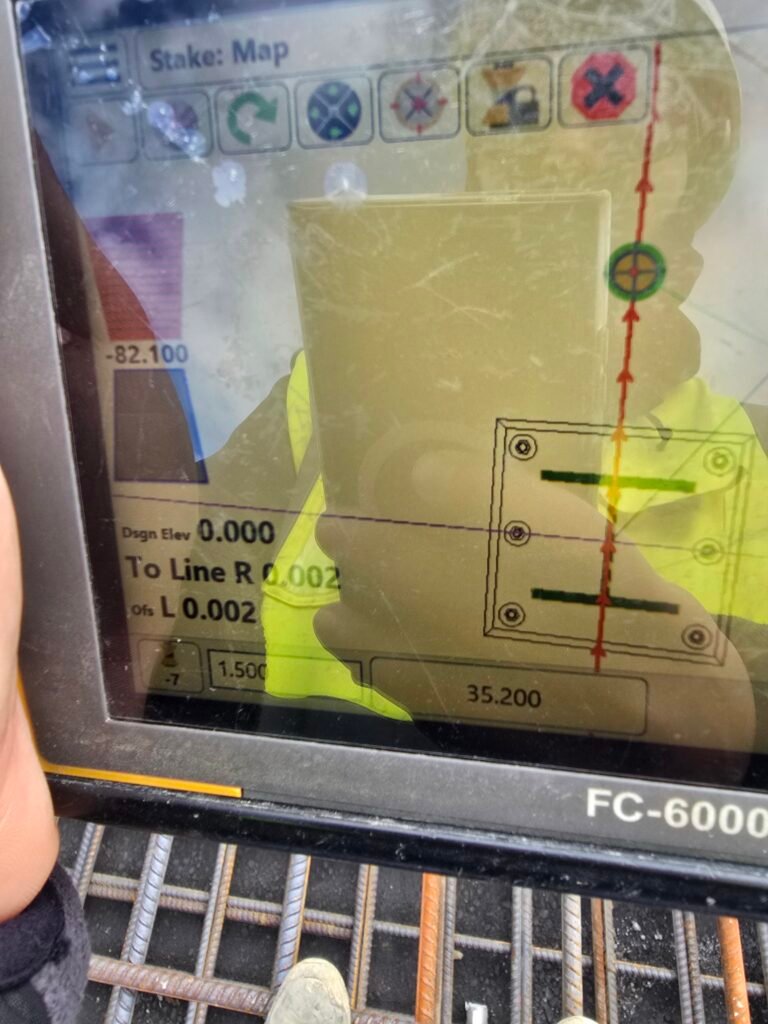
Before any physical construction begins, the initial survey and site analysis are crucial. Topographic surveys are essential at this stage. These surveys map out both natural and man-made features, providing the foundational data needed for successful planning and design. The setting out engineer uses this information to understand the site’s characteristics, identify potential challenges, and establish reference points for accurate setting-out.
Setting Out Techniques and Tools
Modern setting out techniques involve advanced tools that enhance accuracy and efficiency. HP SitePrint is used to print lines, arcs, and text directly onto the site’s floor, offering significantly faster layout speeds with millimetre precision. For comprehensive site data, RDA Surveys uses Leica scanners and Cyclone software for point cloud registration and 3D modelling. These tools enhance the setting out engineer’s ability to accurately translate designs onto the construction site.
Collaboration with Project Managers and Teams
Effective collaboration is integral to a successful project. The setting out engineer must work closely with project managers and various teams to ensure everyone is aligned with the project’s design and specifications. The setting out engineer provides technical expertise. Clear communication is essential for addressing any issues that may arise and keeping the project on track. This collaborative approach ensures that the project meets the highest standards of quality.
Challenges and Solutions in Setting Out Engineering
Common Issues Faced on Site
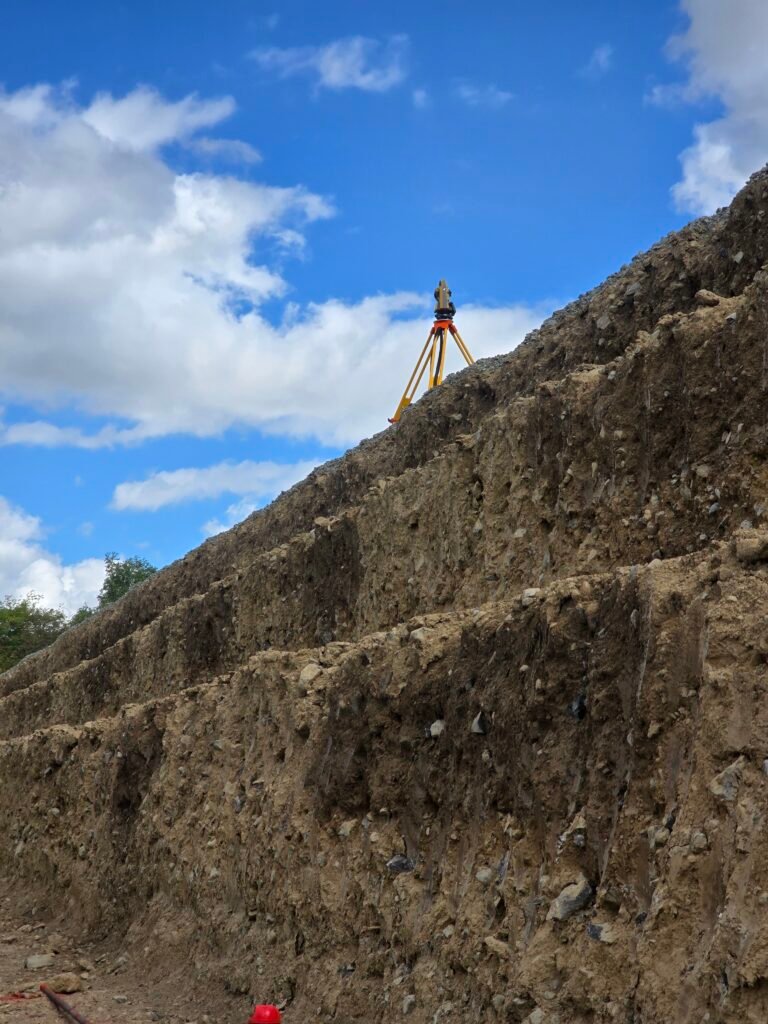
Setting out engineers often face many issues on site. Inaccurate site data poses a problem for construction project managers, leading to delays and errors. Integrating BIM models with on-site construction is also challenging. Time-consuming manual surveying methods used by land surveyors lead to inefficiencies and bottlenecks. The need for precise measurements and the accurate capture of complex site features also add to the challenges faced by the setting out engineer.
Strategies for Effective Problem Solving
Effective problem-solving strategies are essential for overcoming challenges on the construction site. ESOS offers robotic layout solutions to address issues with manual layout inaccuracies, thereby reducing errors and accelerating project timelines. HP SitePrint, an autonomous robotic layout solution, bridges the gap between the BIM model and the job site. ESOS also provides advanced surveying technologies like 3D laser scanning to improve accuracy and accelerate the surveying process.
Leveraging Talent for Successful Project Finish
Leveraging talent is key to achieving a successful project finish. ESOS’s Managing Director, Norbert Mihali, brings over a decade of engineering experience to the company, ensuring projects are delivered with expertise and precision.